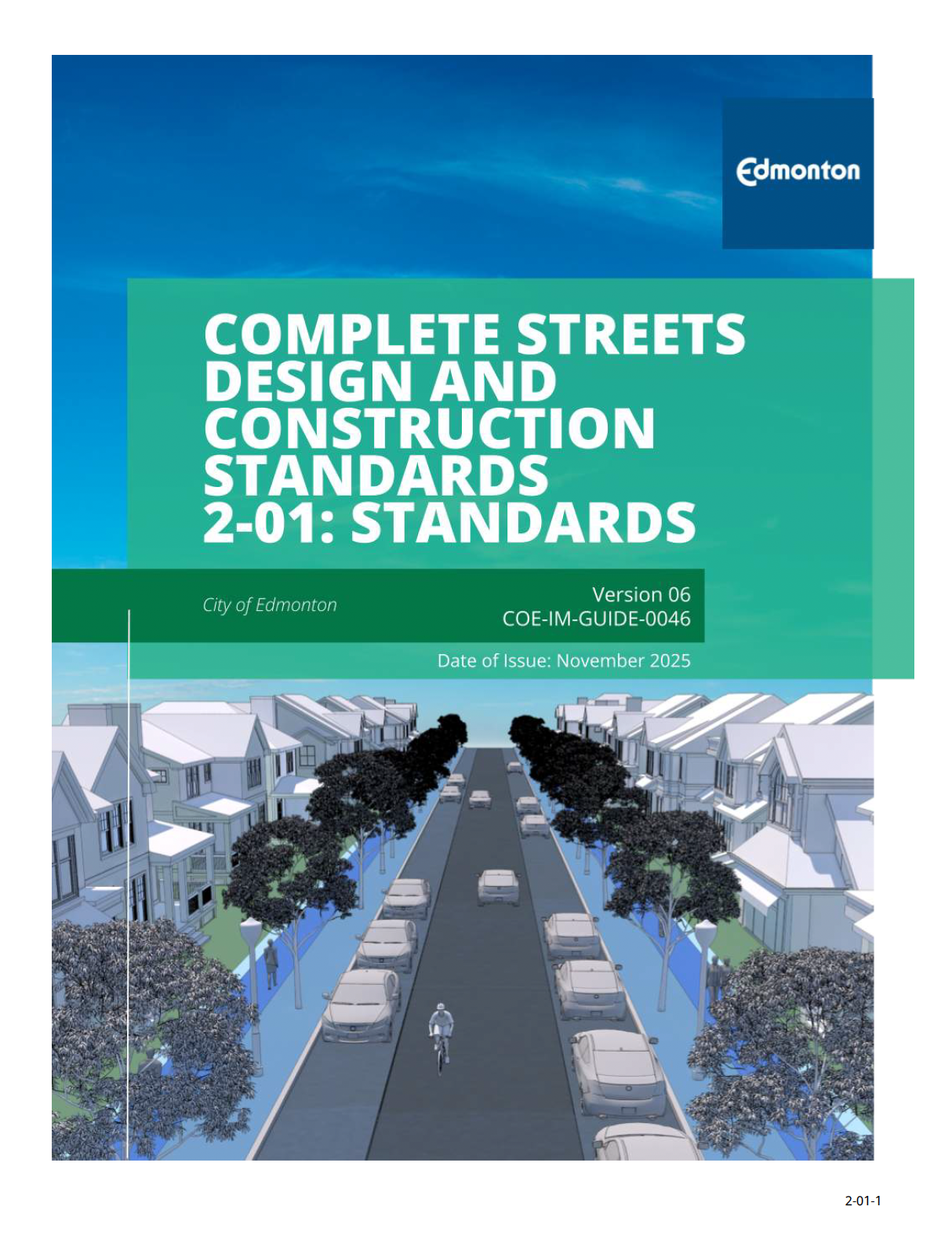
Edmonton Complete Streets Design & Construction Standards
Changing the way streets are designed takes constant care, attention, and learning.
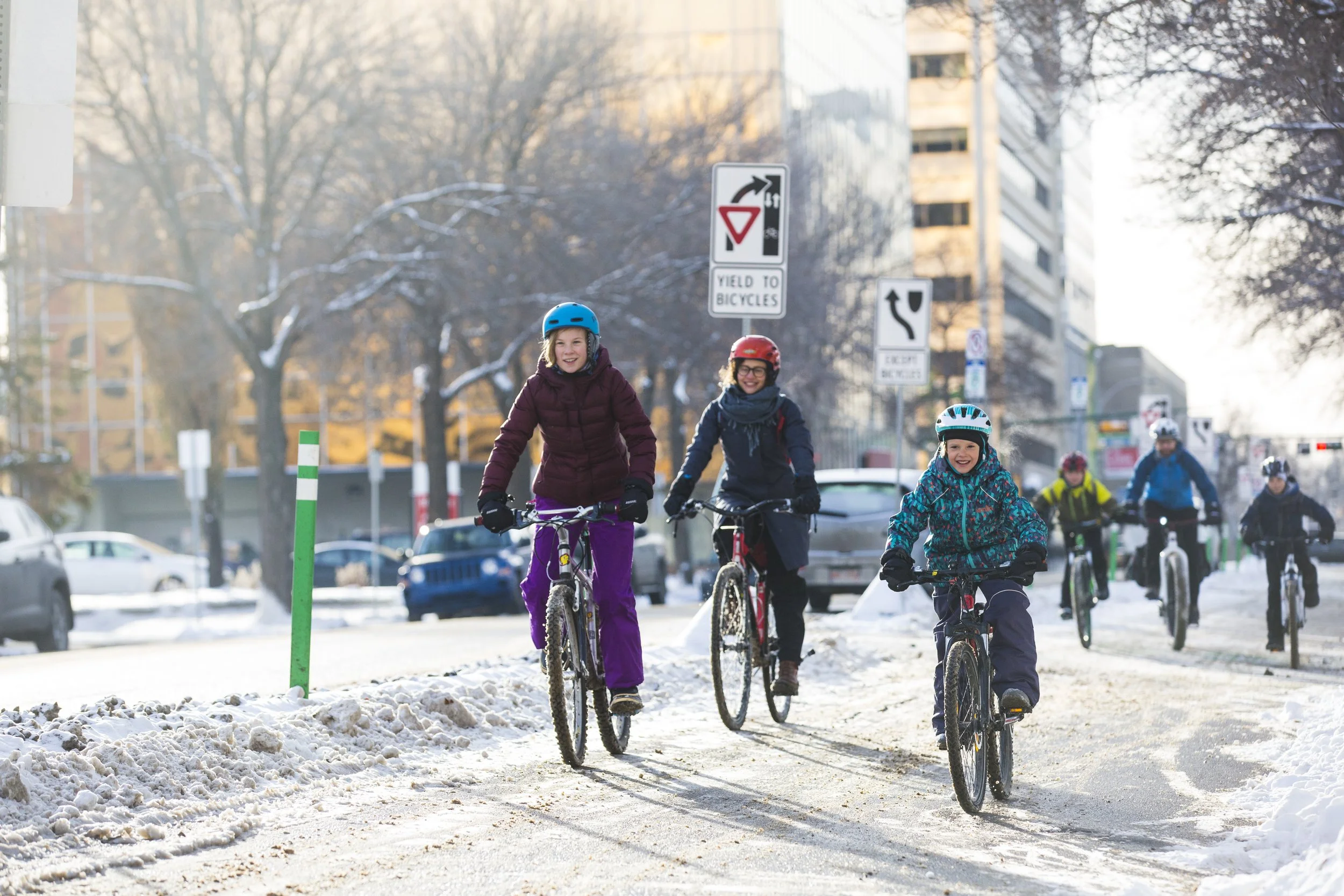
Edmonton has been a leader in context-sensitive street designs to achieve safety, accessibility, and multimodal connectivity. Unlike Complete Streets in many communities however, Edmonton has always considered Complete Streets with a Complete Networks lens. And unlike many others, they have continually gathered project and lived experiences to refine the standards.
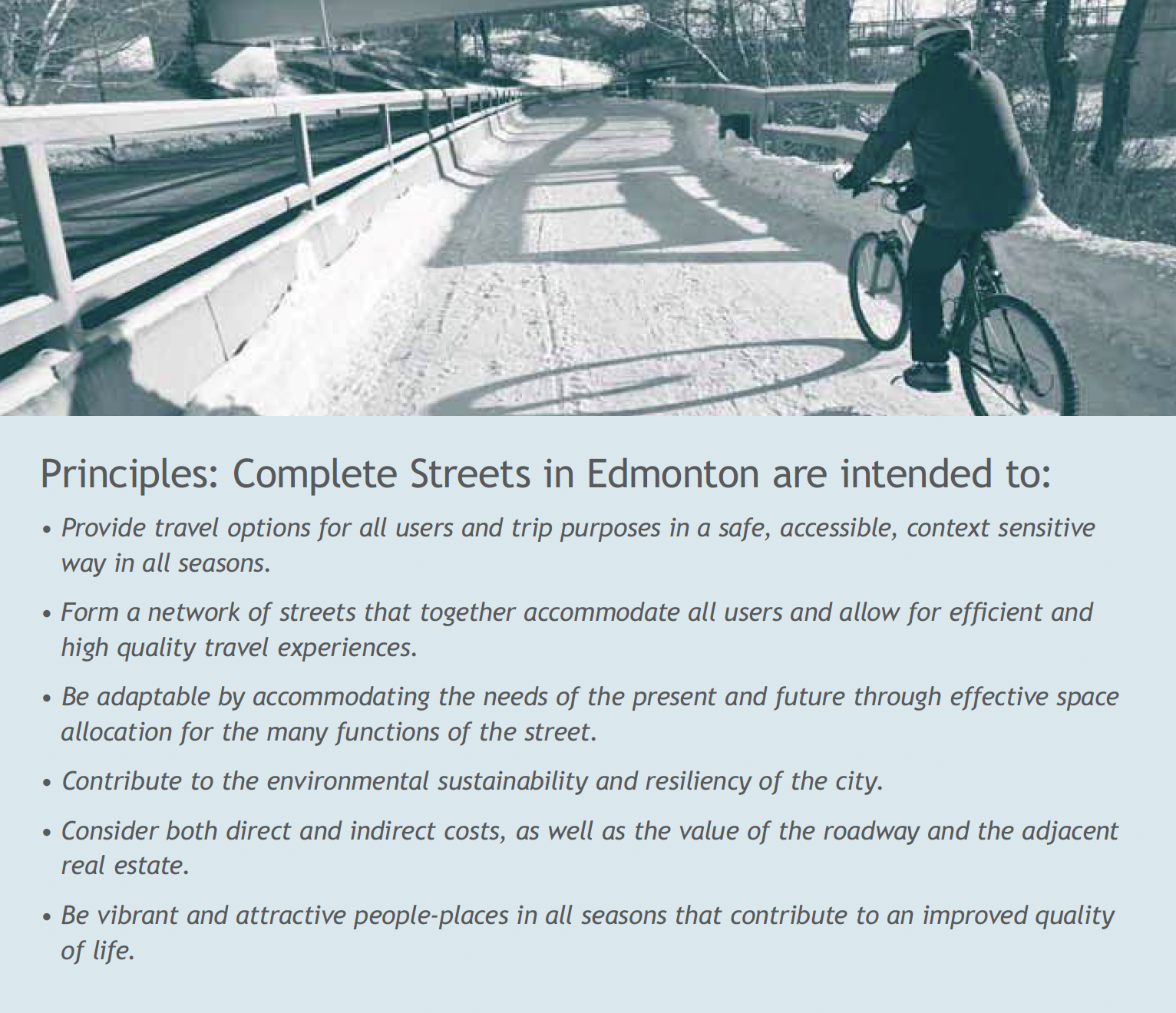
In 2013, Edmonton's Complete Streets Guidelines were approved as an implementation tool for The Way We Move, Edmonton's Transportation Master Plan. This set the stage for applying the principles of Complete Streets, while applying concepts such as modal priority, "Link and Place" and designing from the property lines in rather than centreline out. The Guidelines worked as a supplement to the City's Design and Construction Standards.
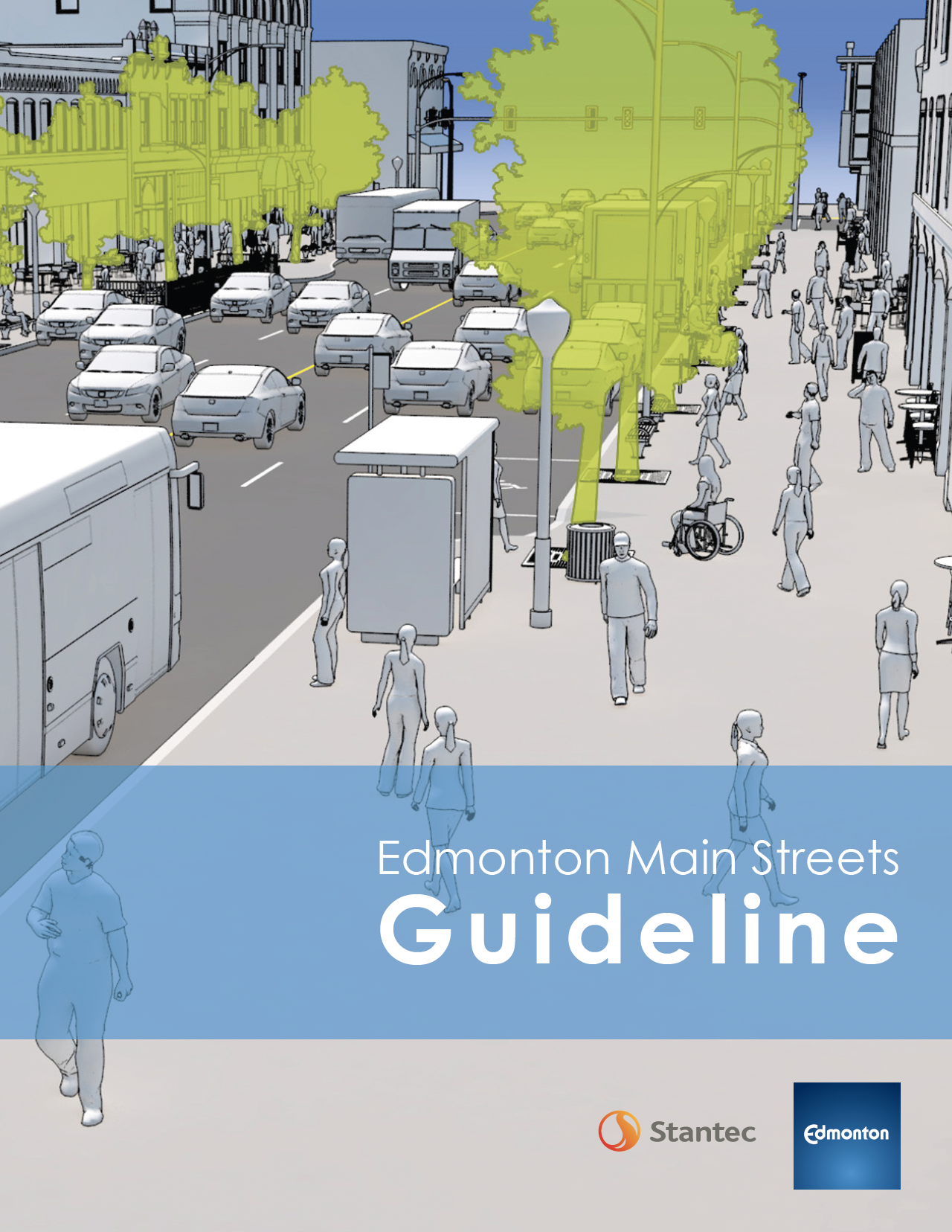
To further support the nuanced application of Complete Streets for historic commercial shopping streets, the Main Streets Guideline was adopted in 2016. Like many communities, Edmonton's main streets come in families based on right-of-way widths originating from initial community layout and design of 20.1 m (i.e. 1 chain), 23 to 24 m, and 30.4 m (i.e. 100 ft). The Main Streets Guideline outline priorities for the allocation of this right-of-way for these street-oriented commercial corridors.
During this period, the City of Edmonton gathered input from industry, the community, and their internal planning, design, operation, and maintenance teams. They learned what was working and what wasn't. One of the big takeaways was the complexity of the design requirements with the Guidelines operating in parallel with the Standards.
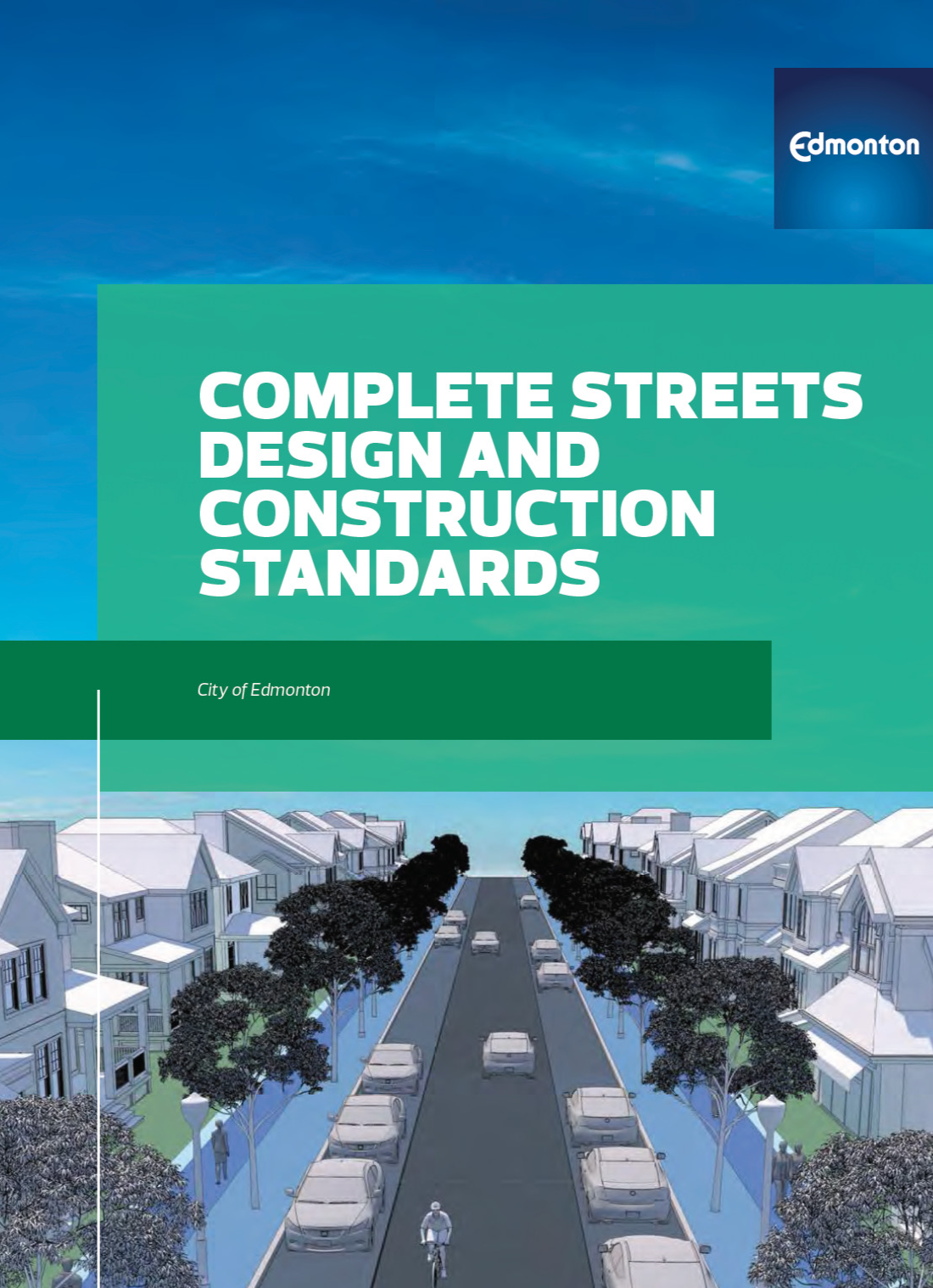
In 2018, the consolidated and updated Complete Streets Design and Construction Standards were approved. These Standards combined the previous Guidelines and Standards and updated them to address the experiences gathered and evolving industry practices. Design lens were added related to the concept of Design Domain, winter city design, Universal Accessibility, and the Safe System Approach. This led to design requirements for walking, cycling, transit, goods, and driving that created holistic corridors and networks that worked together. The designs led to significant expansion in the cycling network, reductions in fatal and serious injury crashes at intersections, and increased accessibility of sidewalks.
And they did not stop there...
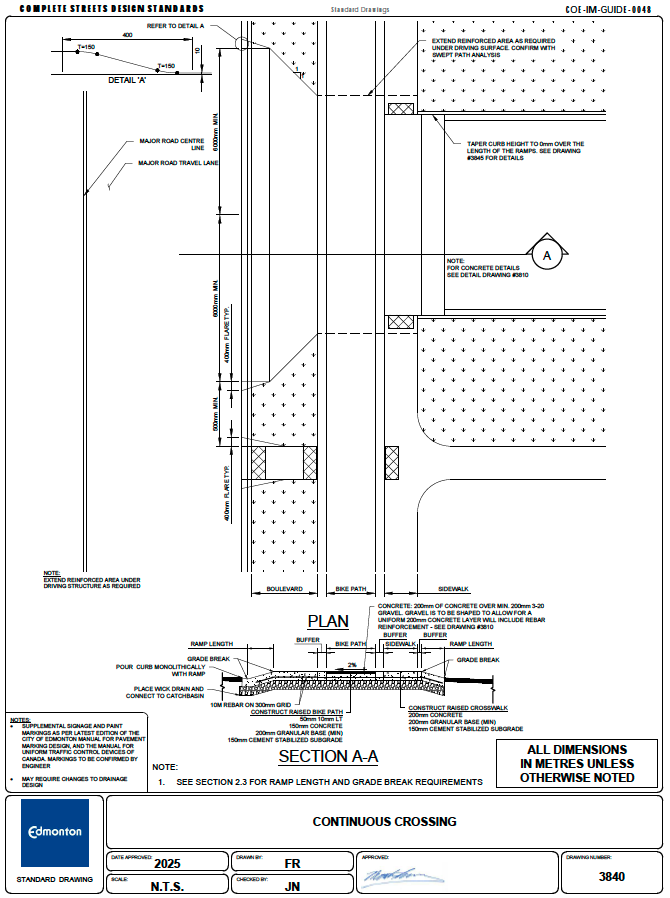
The City of Edmonton continued to monitor implementation and the design issues they were facing in the community. Changes in Provincial engineering professional work product requirements led to a small update in 2021 to add necessary authentication and address minor errors and omissions. In 2023, a minor update was also completed to incorporate design guidance for raised crossings and continuous sidewalks to support the safety and livability of existing neighbourhoods.
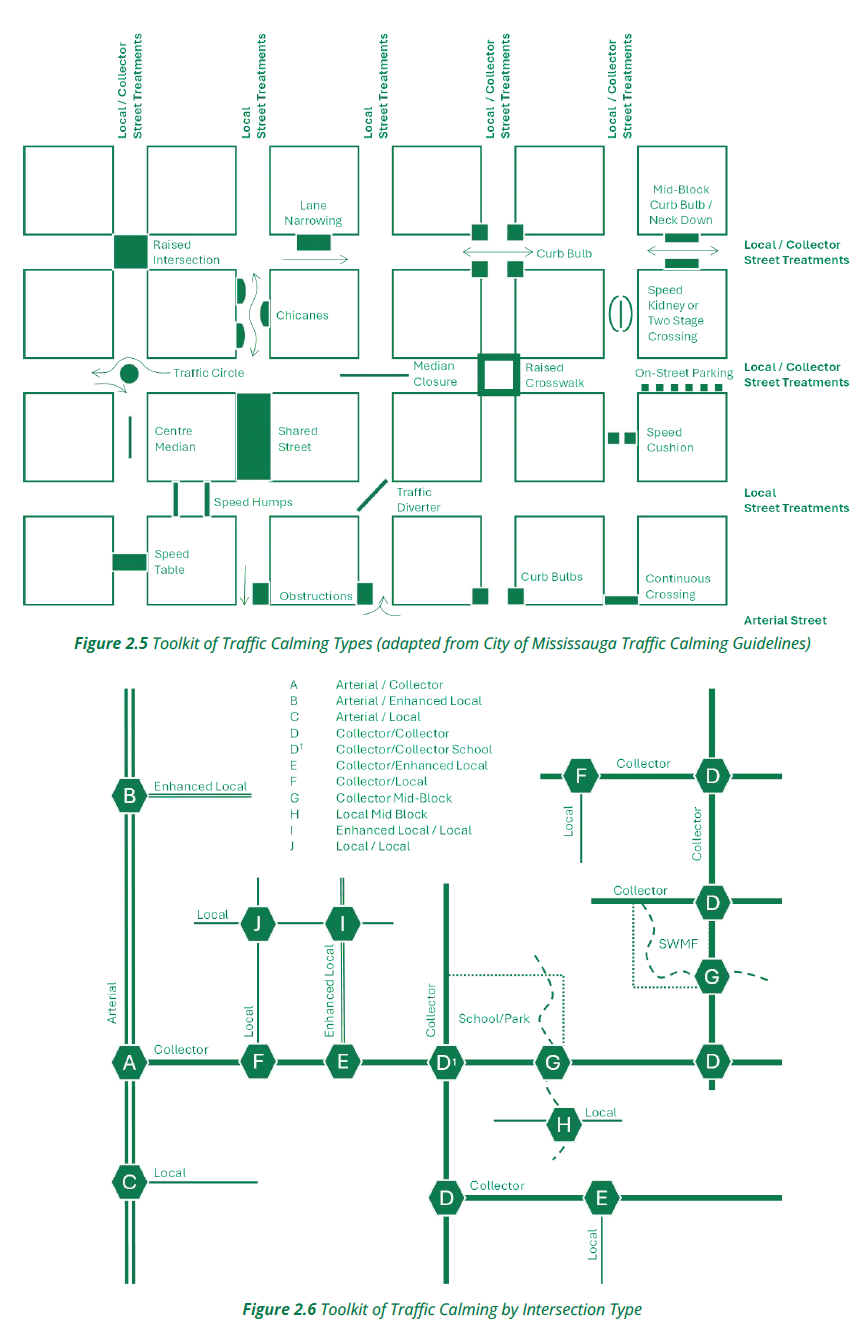
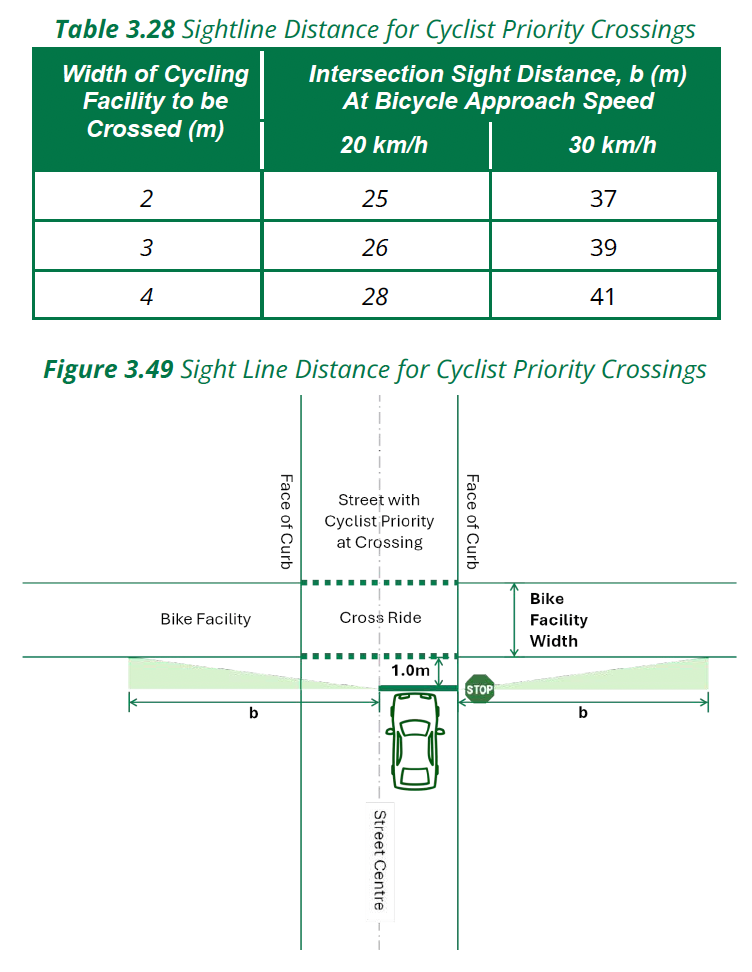
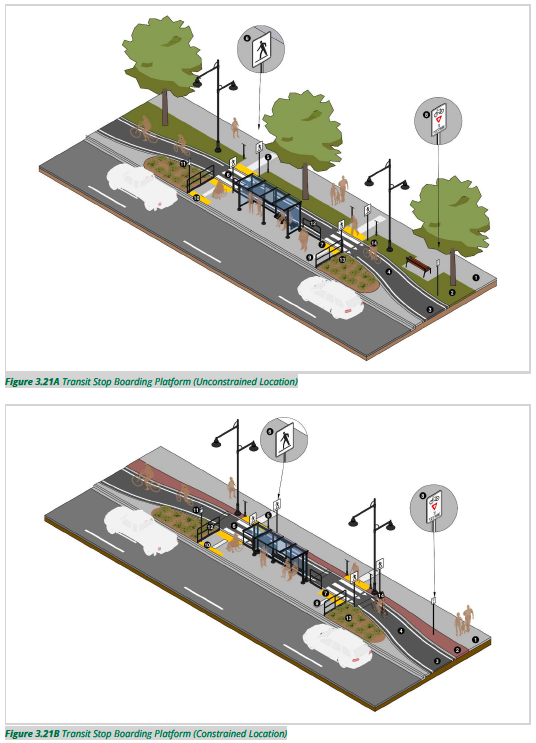
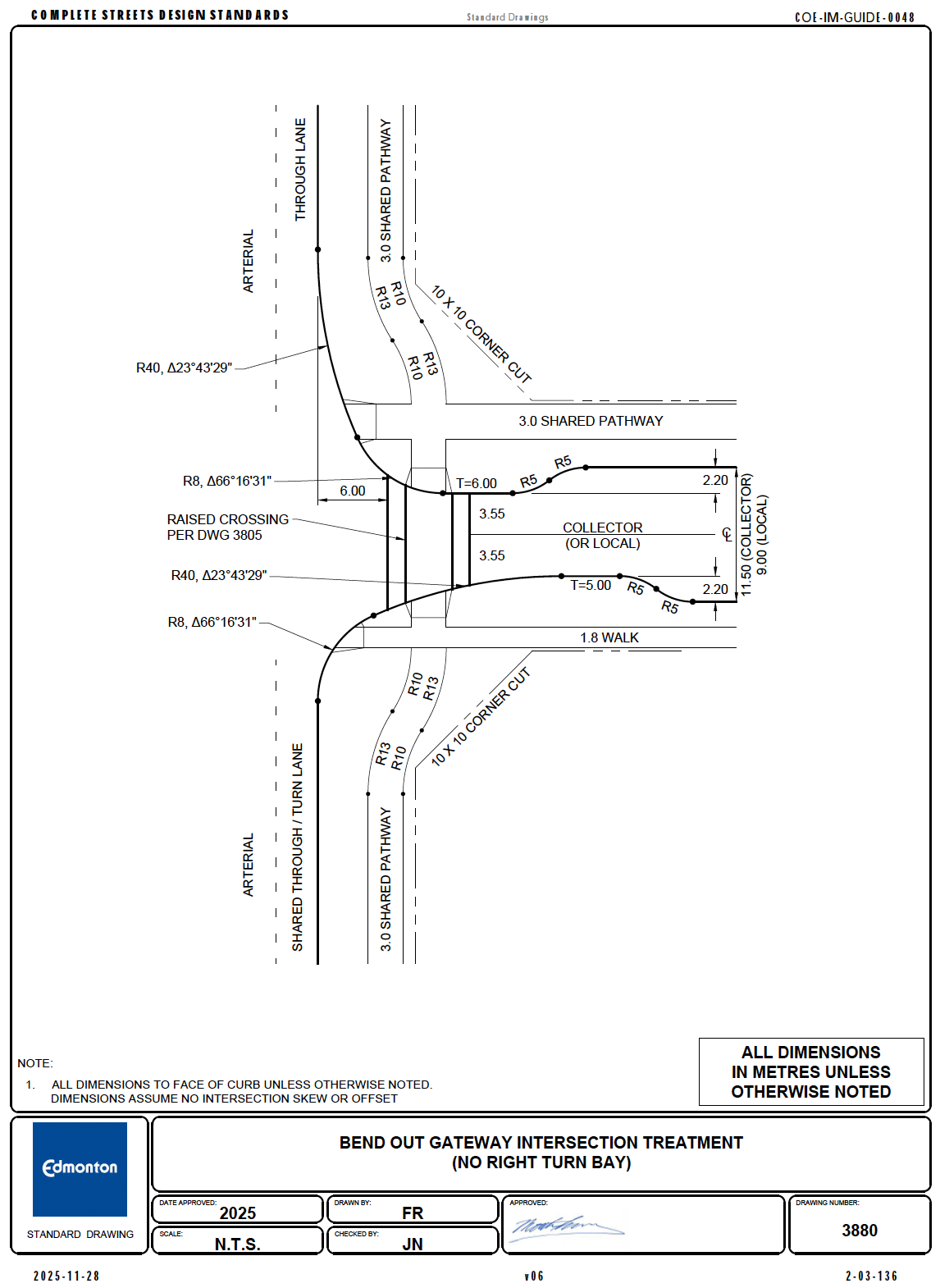
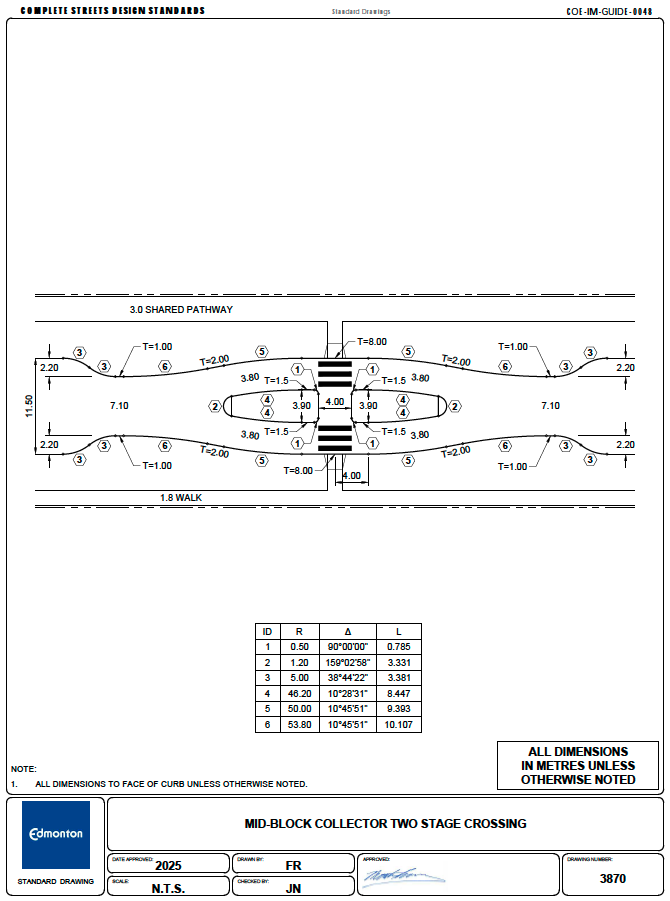
A broader update was also started in 2023 and resulted in the 2025 Complete Streets Design and Construction Standards. This award-winning update mainly targeted updates for safety: Protected Intersections, modern multimodal roundabouts, bicycle facility selection framework, bus stop boarding platforms, neighbourhood traffic calming, sight distances at intersections and crossings, and climate resilience to support the urban tree canopy. And, as you should expect by now, they are still updating their standards in early 2026 with a small edits to address errata based on industry feedback.
Edmonton provides the unique example for others that design practices evolve. They show a process for allowing those changes to be incorporated into design standards without letting it paralyze progress and application. Not every street can do everything for everyone and costs are a constraint everywhere. Edmonton has taken up this challenge head-on with intention and courage to create a community that is safer, more connected, and more accessible than it ever has been. There is still work to be done, but we have no doubts the team at the City of Edmonton will continue their leadership over the next 15 years that they have shown over the past 15.
Our team at Martinson Golly have been fortunate to be part of this journey at every major step from the initial Complete Streets Guidelines and Main Streets Guideline via the first consolidated Complete Streets Design and Construction Standards in 2018 to the current edition published in 2025.
If you need similar support, we are here to help. If you just want to nerd out about design practices or Complete Streets, please reach out as well. We love sharing and learning from the community.
Go to edmonton.ca/completestreets to access Edmonton's design standards.
Services provided to the City of Edmonton included:
Planning / Strategy
Multimodal transportation planning
Active transportation planning
Transportation network planning
Master planning
Road safety / Safe System / Vision Zero strategy
Design guidelines and standards
Street design
Walking facilities design
Cycling facilities design
Intersection design