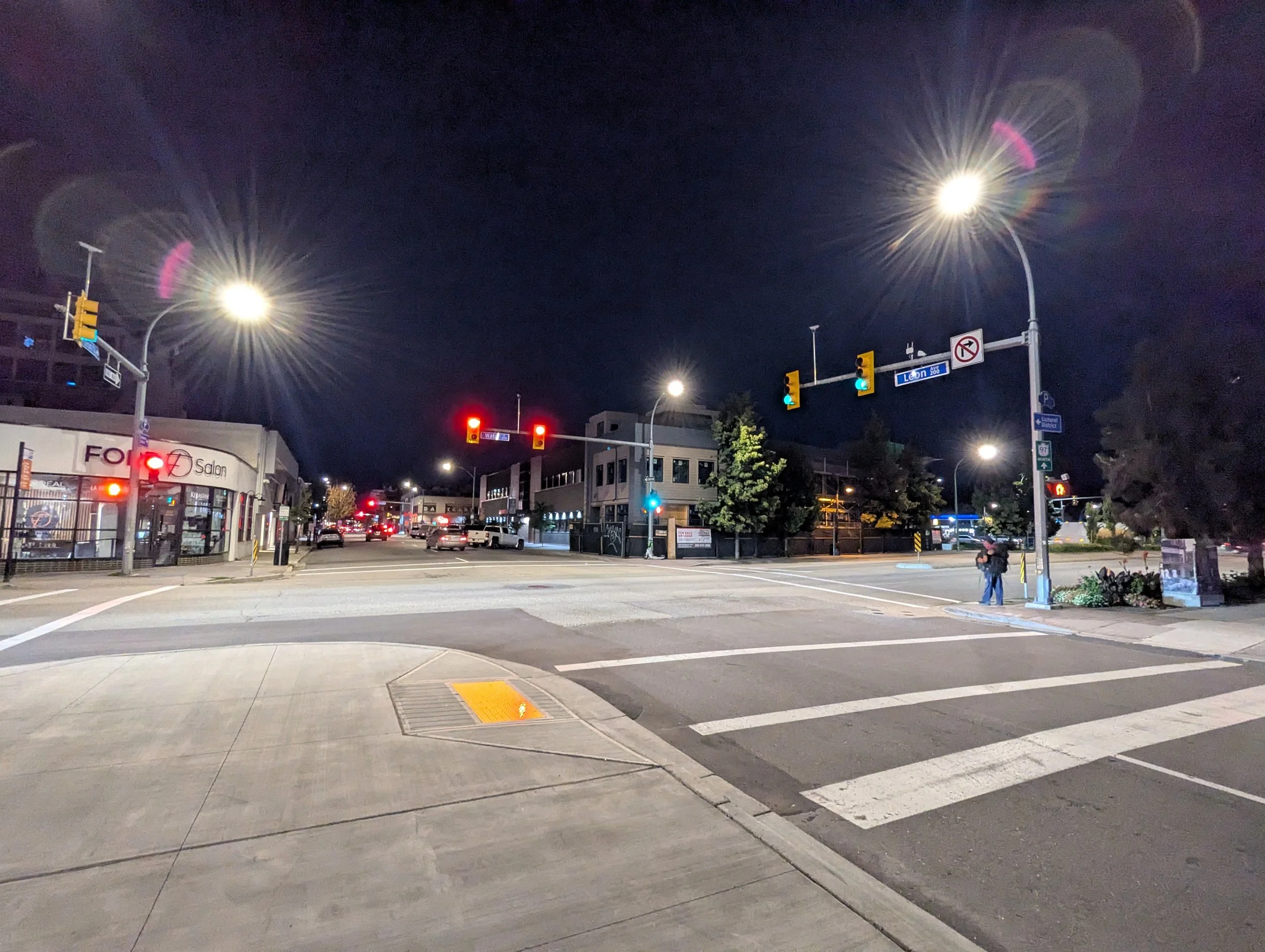
Kelowna Safe System Assessment
Safe mobility is essential to a connected, thriving community. Improving communities is at the core of what we do.
At Martinson Golly, our team uses the Safe System Approach, a people-centred framework for improving safety that acknowledges both human error and the limitations of the human body in absorbing energy from a crash. This approach aims to eliminate transportation-related injuries and deaths by proactively mitigating risks and building redundancy in the system.
We applied these principles in our recent work with the City of Kelowna. Last year we collaborated with Abley to complete a risk-based Advanced Network Screening Analysis in support of the City of Kelowna’s Vision Zero commitment. This analysis goes beyond traditional crash-density methods by identifying locations with a high likelihood of future crashes resulting in death or serious injury.
Risk metrics were developed for all intersections and corridors in Kelowna using:
Crash data
Traffic volumes
Speed limits
Functional classifications
Intersection control types
These metrics were combined into an investigation priority rating, to help the City of Kelowna to identify where targeted interventions are most likely to achieve reductions in road trauma. The results informed an Investigation Plan to further prioritize high-risk locations for Safe System Audits, considering policy direction, local context, and opportunities to align with other capital projects.
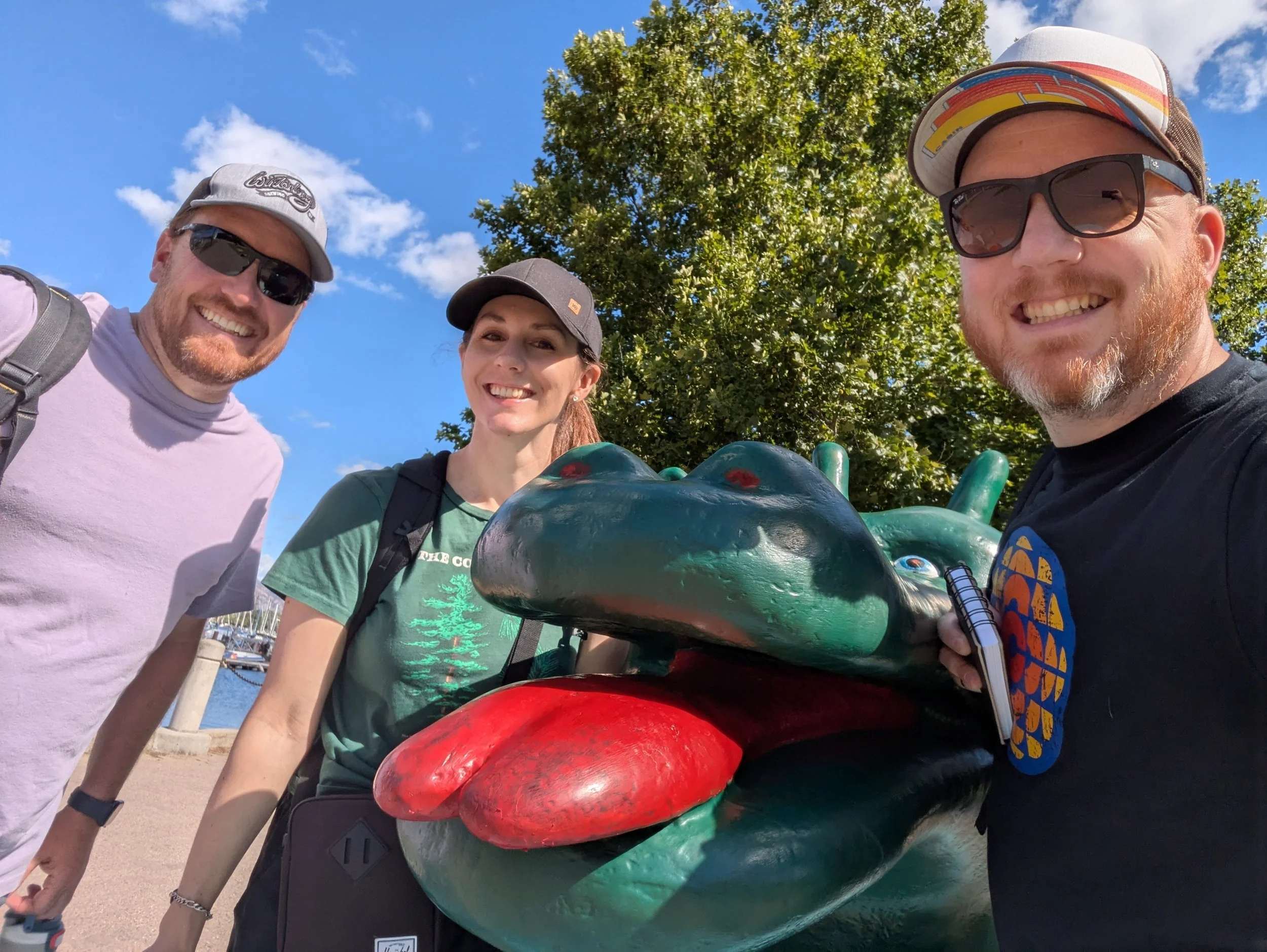
At the same time, the City of Kelowna was advancing its Downtown Area Plan. Many downtown corridors and intersections emerged as high priority through the Advanced Network Screening and Investigation Plan, creating an opportunity to complete a Safe System Audit and address existing safety risks as part of the plan. Our team visited Kelowna in August 2025 to complete the Downtown Safe System Audit.
The Safe System Audit used the Safe System Assessment approach from Austroads. In our opinion, this assessment provides a sharper multimodal focus for in-service road safety reviews than current guidelines in Canada, while also focusing on crashes that result in serious injury and death. If you are interested in how this approach has been adapted to the Canadian context from Australia and New Zealand, we would recommend searching out the recent guide from Good Roads in Ontario.
Highlights from our Safe System Audit include:
Focus on addressing risks for vulnerable road users:
Highest risks in the downtown area are based on potential crashes with vulnerable road users, which may result in serious injury or death with vehicle speeds of 30 km per hour or greater
Recommendations to address this risk included:
Protected cycling facilities to separate users
Traffic calming measures, including gateway treatments, to support reduced speed limits and operating speeds
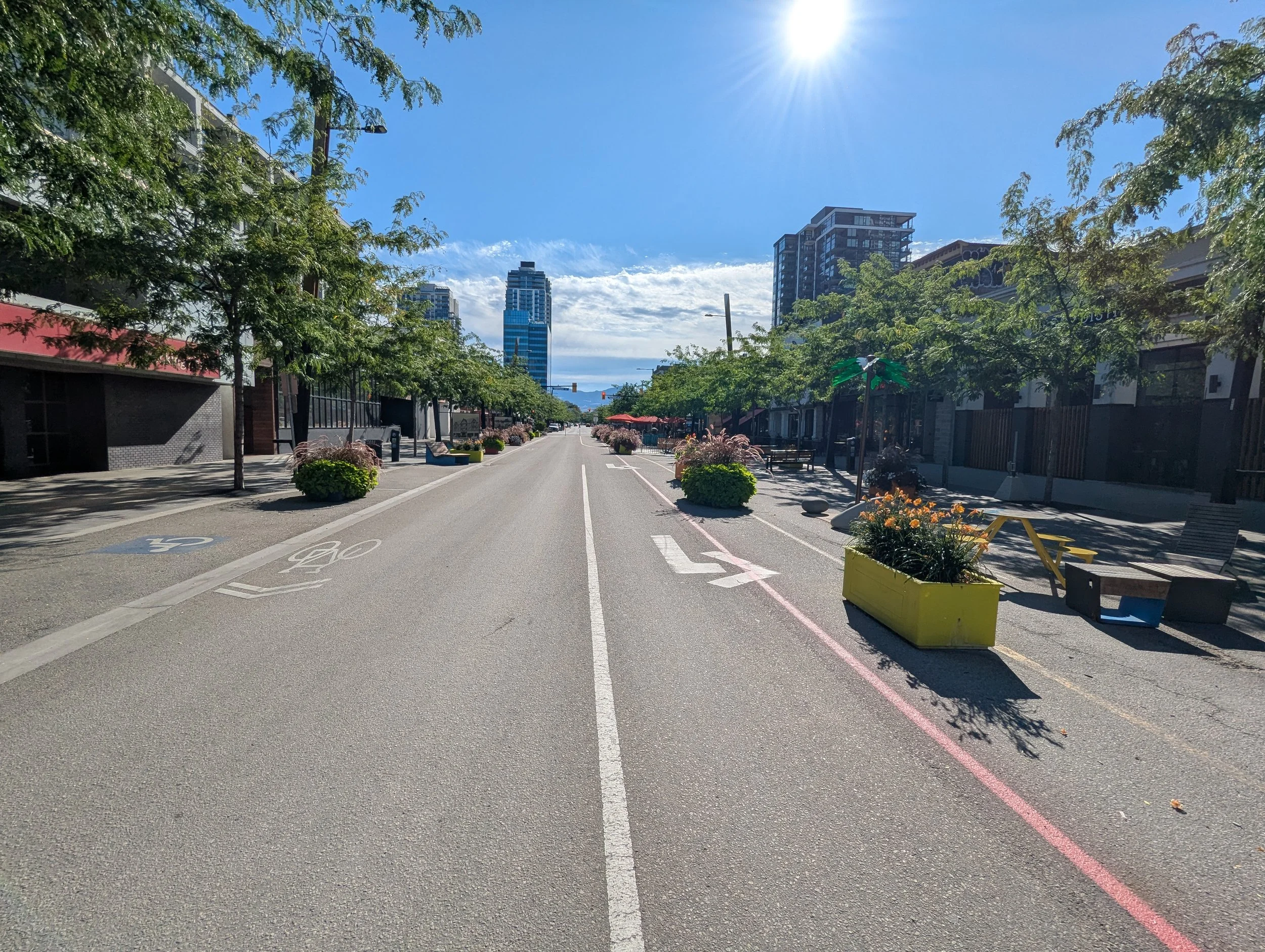
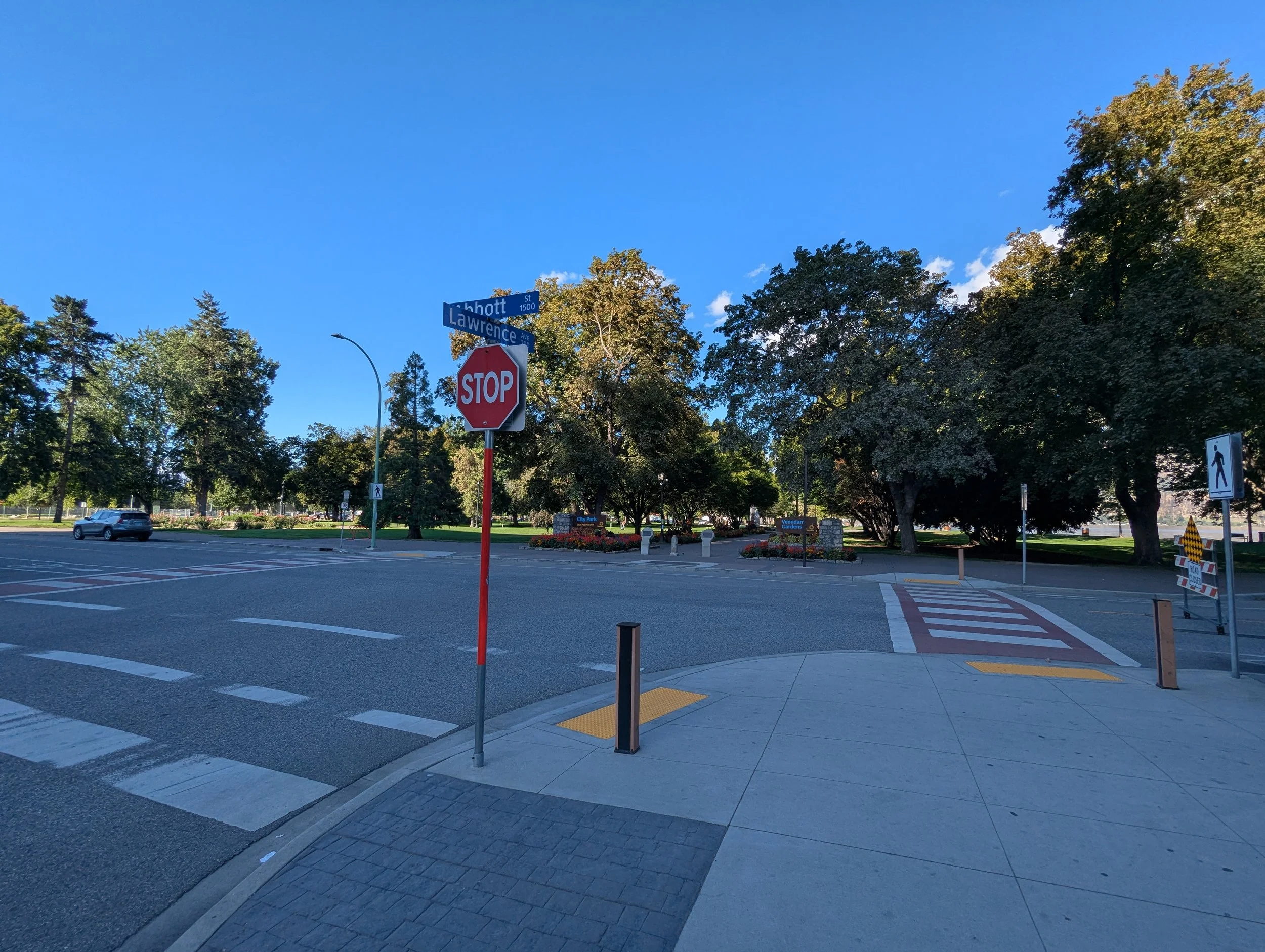
Curb extensions and conversion of angle parking to parallel to improve visibility at crosswalks
Restricting right turns on red and implementing leading pedestrian intervals to remove or mitigate conflicts at intersection
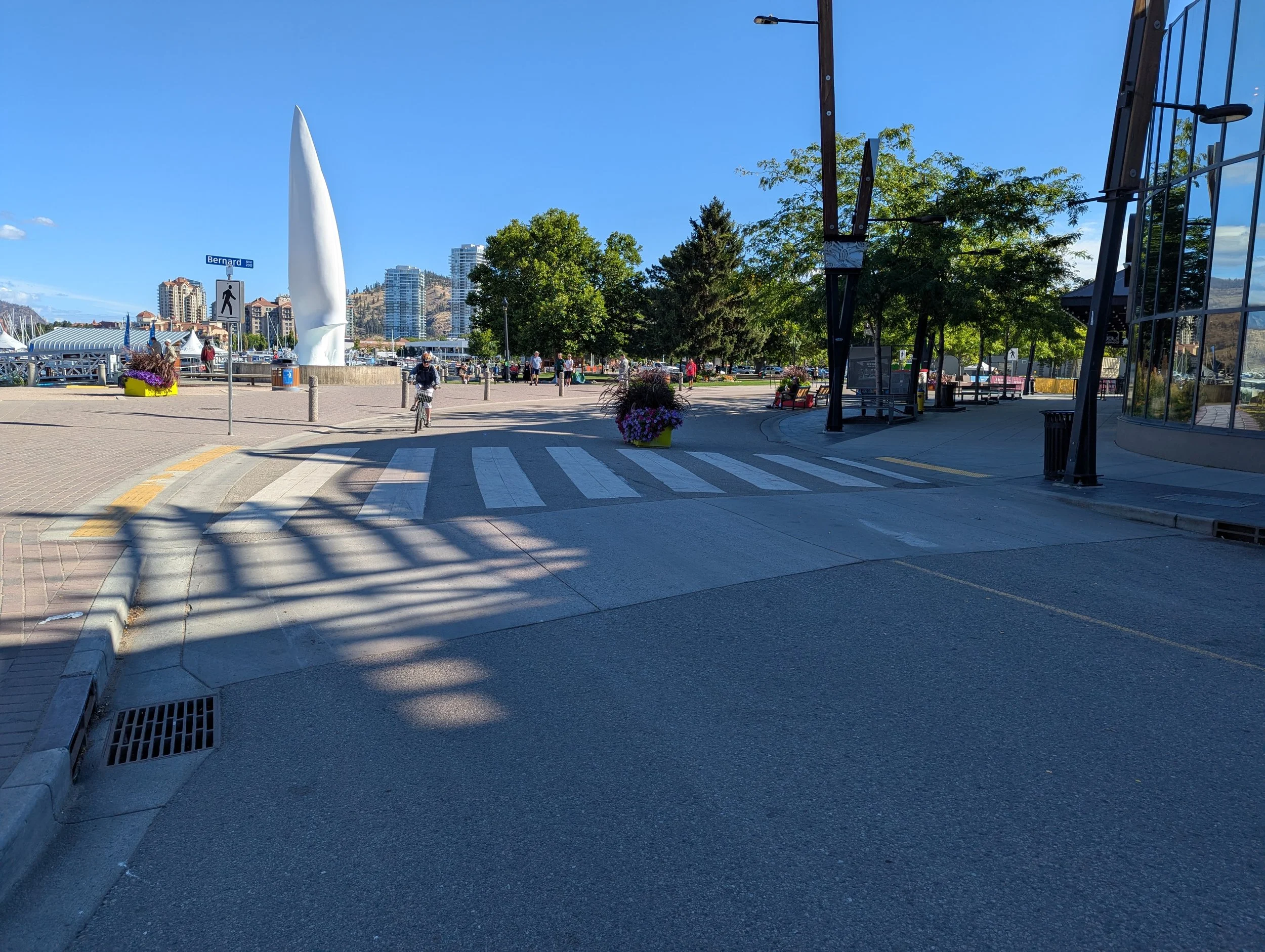
Installing additional crossings on longer blocks
Mitigations for risk of side impact vehicle crashes:
Side impact crashes were also frequent in the study area and posed higher risks for serious injuries for drivers
Recommendations to address this risk included:
Reviewing and adjusting yellow clearance or all-red intervals at signals
Implementing safety cameras at intersections
Constructing roundabouts
Improving visibility at driveways by restricting parking with curb extensions
Reach out to us if you’d like to learn more about completing Safe System Assessments for in-service locations or design plans. We are happy to help you improve safety in your community!
Services provided to the City of Kelowna included:
Road safety / Safe System / Vision Zero strategy
Traffic safety culture
Change management
Safety in-service review or design audit
Safety network screening
Evaluation / prioritization - quantitative and qualitative data
Project management